
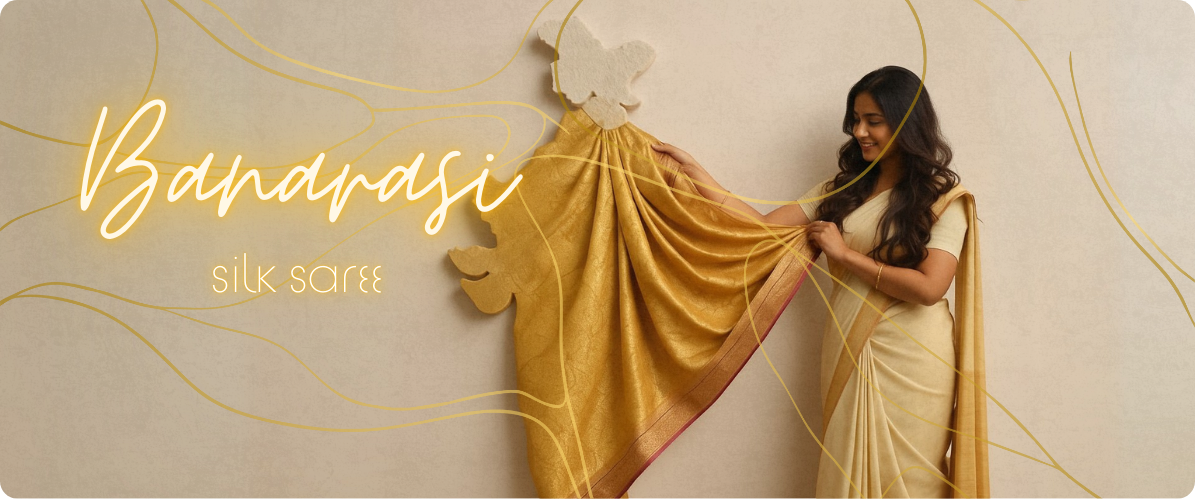
How Banarasi Sarees are Manufactured
The creation of a single Banarasi saree is a painstaking, multi-step process that can take anywhere from a few weeks to several months, depending on the complexity of the design.
Design & Graph Making: The process begins with a designer creating a detailed blueprint on paper. These designs are often inspired by Mughal art, flora and fauna like peacocks and lotuses, and intricate geometric patterns. This blueprint is then transferred onto a punch card, which acts as a stencil for the loom.
Thread Preparation: High-quality silk yarn, often sourced from South India, is twisted and treated. It is then meticulously dyed into the vibrant colors required for the saree’s body, border, and pallu. The metallic zari threads (traditionally made from real gold or silver, but now often a mix of silk and copper with a gold or silver sheen) are also prepared.
Loom Setup & Weaving: The prepared threads are carefully set up on a handloom, a complex and time-consuming task. The weaving is done by skilled artisans, often working in teams. The weavers use special techniques to create the intricate designs. Two common techniques are:
Kadwa (Kadhua): A more complex and time-consuming technique where each motif is woven separately. This creates a more robust, embossed design with no loose threads on the back of the fabric.
Cutwork (Phekwa): This technique involves weaving motifs together, which leaves loose threads on the reverse side of the fabric that are later carefully cut away.
Finishing: Once the weaving is complete, the saree is carefully removed from the loom, and any loose threads are trimmed. It’s then ironed and packaged.
State of Origin and Traditional Wearing
Manufacturing Hub: While Banarasi sarees are worn all over India, their origin and primary manufacturing hub is Varanasi, a city in the state of Uttar Pradesh. The surrounding districts of Mirzapur, Chandauli, Bhadohi, Jaunpur, and Azamgarh are also known for this craft. A Geographical Indication (GI) tag ensures that only sarees made in these six districts can be legally sold as “Banarasi.”
Wearing Across India: Banarasi sarees are a symbol of elegance and are worn throughout India, but their styling varies by region.
Uttar Pradesh & North India: Often worn in the classic Nivi drape for weddings and festivals, paired with traditional gold jewelry.
West Bengal: Draped in the “Athpourey” style with a signature box pleat in the front, commonly seen during Durga Puja.
Gujarat: Worn in the “Seedha Pallu” style, where the pallu is draped from the back over the right shoulder to showcase the intricate zari work.
Tamil Nadu: Among Tamil Brahmins, the Madisar drape is used for religious ceremonies, where the nine-yard saree is wrapped like a dhoti.
Key Varieties and Their Impact
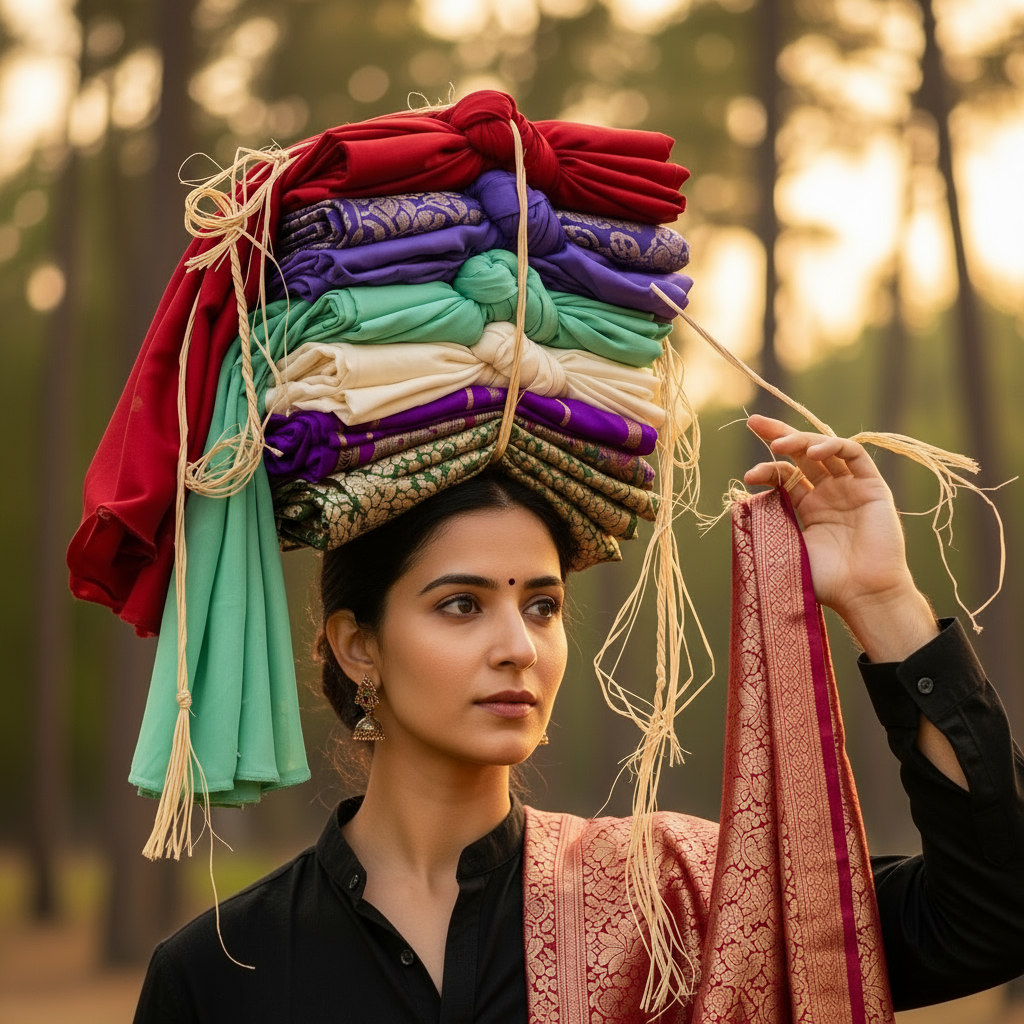
The Banarasi saree comes in various types, each with its unique fabric and weaving style.
Katan: Made with pure mulberry silk yarn, this is the most common type. It is known for its exquisite shine and smooth texture.
Georgette: A sheer, lightweight crepe fabric that offers a soft drape. It is a popular modern choice for its comfort and flowy feel.
Organza (Kora): A thin, stiff, and translucent fabric with a subtle shine. It features intricate zari work on a delicate base, creating a regal look.
Jangla: Known for its intricate, dense floral motifs that cover the entire body of the saree, making it very heavy and opulent.
Brocade: Features a heavily woven, raised pattern of silk and zari threads, creating a rich texture and grand appearance.