
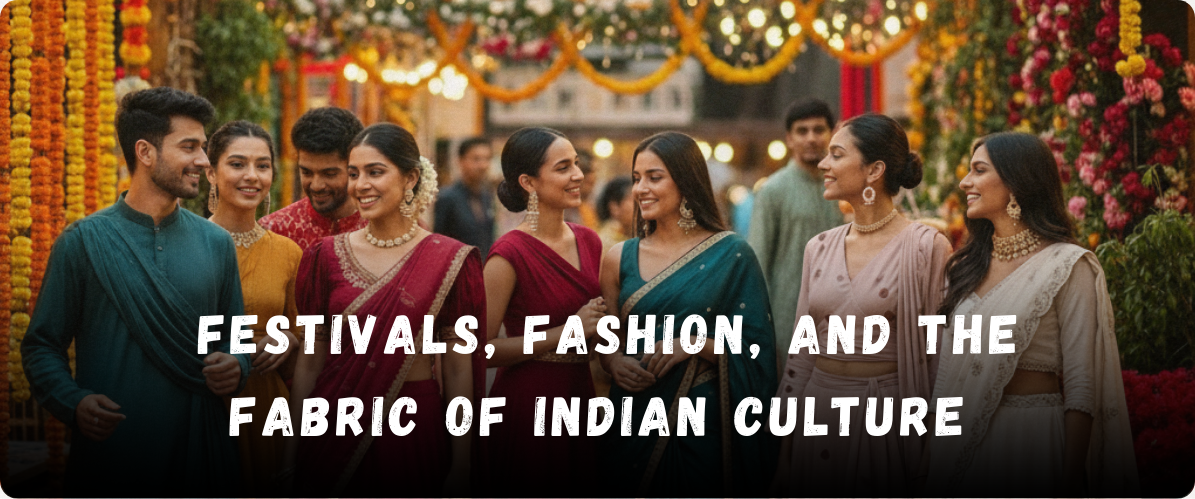
The Importance of Fashion in Indian Festivals
A Symbol of Tradition and Heritage: During festivals like Diwali, Navratri, and Eid, wearing traditional attire is a way of honoring centuries-old customs. Sarees, Lehengas, Kurtas, and Sherwanis are not just garments; they are symbols of cultural pride, with each weave, embroidery, and color holding specific historical and regional significance. For instance, wearing a vibrant Bandhani saree from Gujarat or a heavy Banarasi brocade for a wedding links a person directly to the legacy of a specific craft and region.
A Medium of Expression: Fashion allows individuals to express their joy and spirituality. The colors chosen for a festival often carry a special meaning—bright reds and golds for prosperity during Diwali, white and pastels for serenity during Eid, and a rainbow of colors for the energetic dance of Navratri. The act of dressing up is a ritual that prepares a person for the festival’s spiritual and social significance, elevating the celebration from an ordinary day to a momentous occasion.
Fostering Community and Unity: The shared tradition of dressing up in specific attire for a festival fosters a sense of unity and belonging. When communities come together, whether for a prayer, a feast, or a dance, their collective vibrant attire creates a stunning visual spectacle that reinforces their shared identity and communal bond. This is especially evident during large-scale festivals like Holi, where people of all ages and backgrounds wear white to serve as a blank canvas for the colors of the festival.
The Economy of Craftsmanship: Indian festivals are a major driver of the textile and fashion industry. They fuel the demand for handloom products, intricate embroidery, and traditional craftsmanship. Artisans who specialize in Zardozi, Gota Patti, and Chikankari rely on the festival season for their livelihoods. This creates a powerful economic cycle that sustains traditional art forms and keeps cultural heritage alive.
Festivals and Their Fashion
Diwali (The Festival of Lights): This is one of the grandest festivals, and fashion is at its peak. Women often wear intricate sarees (especially silk and Banarasi) and Lehengas, while men wear decorated Kurtas and Sherwanis. The focus is on opulence, with bright colors, gold embellishments, and rich fabrics symbolizing prosperity and celebration.
Navratri (Nine Nights of Dance): This festival is a spectacle of color and movement. The attire for the Garba and Dandiya dances is characterized by bright, mirrored Ghagra Cholis and ornate kurtas. The outfits are designed for comfort and flair, with skirts that flare beautifully with every spin.
Eid: Eid fashion is a blend of grace and sobriety. While celebrations can be grand, the attire often favors elegance. Women choose embroidered Salwar Kameez, Anarkalis, and light, flowing sarees, while men wear fine kurtas and pajamas. The colors are often pastels, whites, and rich, deep tones, with delicate embroidery and subtle embellishments.
Holi (The Festival of Colors): The tradition for Holi is simple: wear old, white clothes. This seemingly simple choice is deeply symbolic, as the white fabric becomes a vibrant canvas of colors as people joyfully throw colored powders and water at each other. It’s a day when social barriers dissolve, and everyone is covered in the same celebratory hues.