

Every swirl of Tilla work, every delicate stitch of Aari embroidery on a Kashmiri Saree tells a story. It’s a tale of unparalleled artistry, a legacy passed down through generations, and a testament to human dedication. When you drape a Kashmiri Saree, you’re not just adorning yourself with ethnic wear; you’re enveloping yourself in a piece of living history, meticulously crafted by Kashmiri artisans whose passion keeps a precious handloom heritage alive.
Have you ever wondered about the hands that weave such magic? The untold stories embedded in every thread? This blog post delves into the heart of Kashmir, celebrating these skilled individuals and highlighting the vital role ethical fashion plays in sustaining their ancient craft.
The Valley's Legacy: A Tapestry Woven Through Time
Kashmir, often called “Paradise on Earth,” is equally renowned for its exquisite textile arts. For centuries, the Valley has been a crucible of creativity, producing masterpieces from the legendary Pashmina shawls to intricate needlework that captivated royalty and connoisseurs worldwide. This rich tradition isn’t merely an economic activity; it’s a profound expression of Kashmiri culture, identity, and generational knowledge.
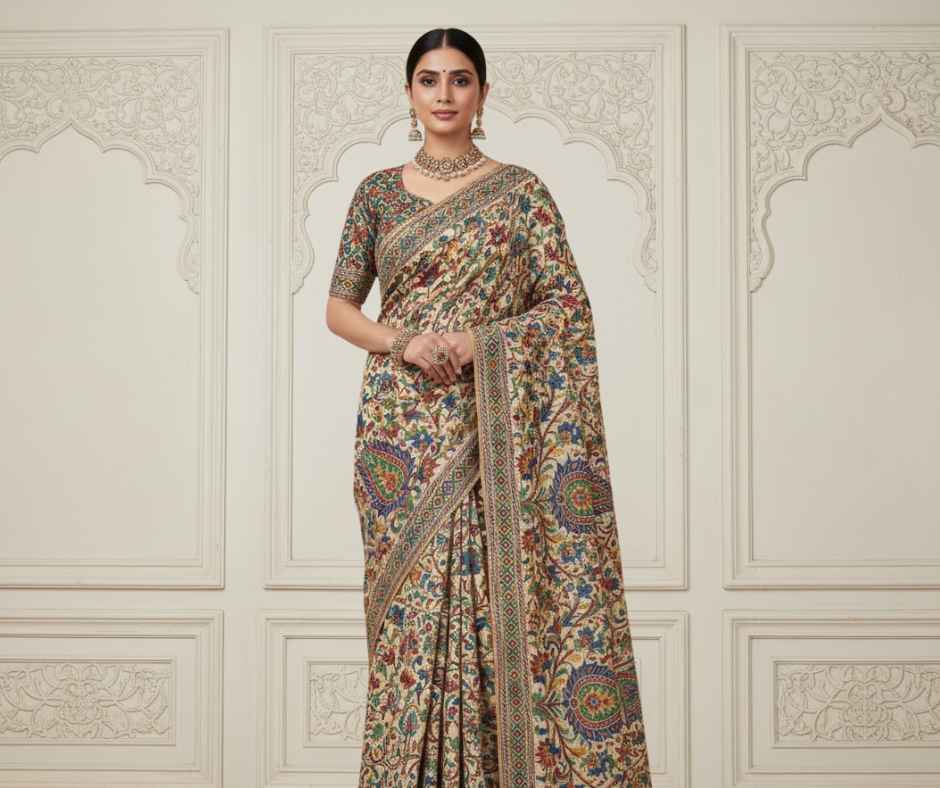
The transition of these intricate techniques onto the six yards of a saree was a natural evolution. As fashion changed, so did the canvas, allowing the unique Kashmiri artistry to flourish on a garment that holds immense significance in Indian culture. Today, a Kashmiri Saree stands as a beacon of this glorious past, reimagined for the contemporary wearer.
The Maestros: Unveiling the Hands That Sculpt Silk and Thread
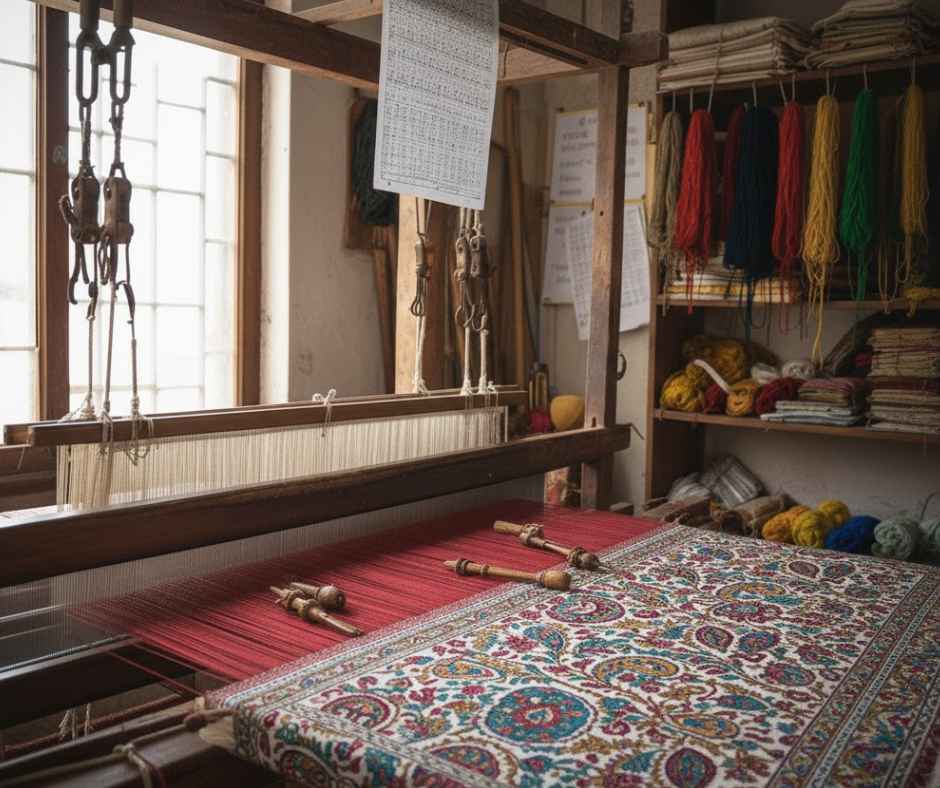
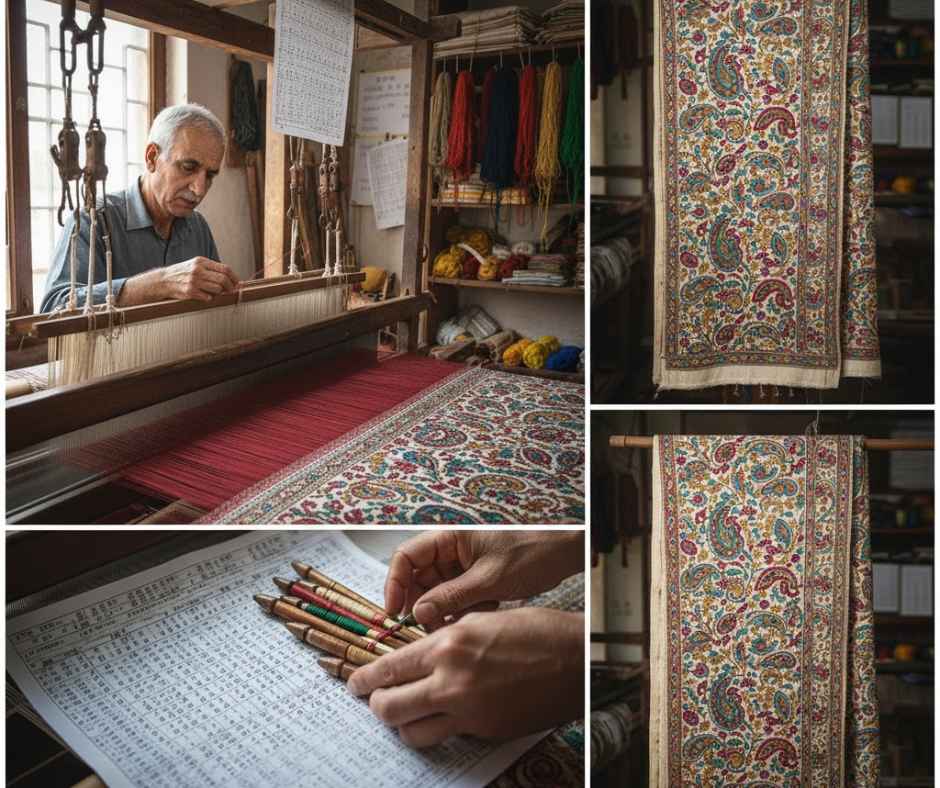
The creation of a single Kashmiri Saree is a journey, not a sprint. It begins with the Kashmiri artisans – often multi-generational families, sometimes working in small, shared workshops, or from the quiet comfort of their homes amidst the Valley’s serene landscapes. For many, this craft is not merely a livelihood; it is their ancestral calling, a sacred trust passed down from elders.
The apprenticeship is rigorous, spanning years, where young hands learn the delicate balance of tension, the precise movement of the needle, and the intricate patterns by heart. It’s a silent school of patience, precision, and profound dedication. Each artisan becomes a custodian of techniques perfected over centuries, transforming raw silk or georgette into a breathtaking tableau.
However, these maestros face significant challenges. The influx of cheap, machine-made imitations, fluctuating demand, and regional instabilities often threaten their traditional way of life. This makes their perseverance and the continued existence of their craft even more precious and deserving of our support.
A Symphony of Stitches: Understanding Kashmiri Embroidery Techniques
The magic of a Kashmiri Saree lies in its distinctive embroidery, each technique adding its own unique texture and story.
-
Tilla Work: The Glimmer of Royalty
-
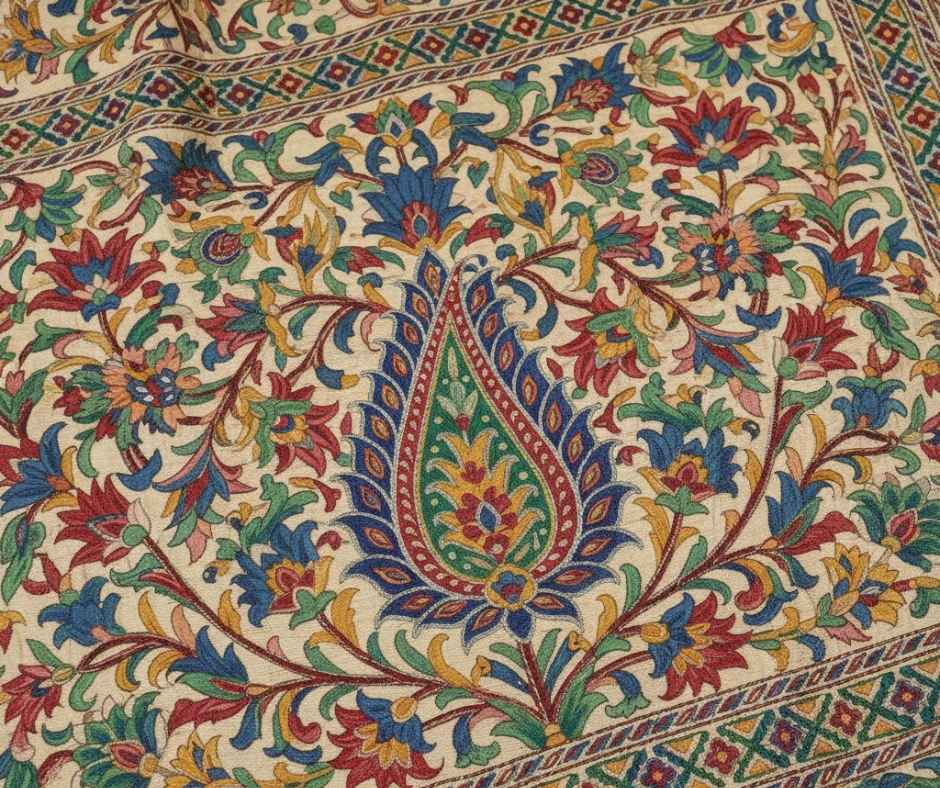
This is perhaps the most iconic Kashmiri embroidery. Tilla work involves using fine metallic (gold, silver, or copper-toned) threads, often flattened, to create shimmering patterns. The artisan painstakingly stitches these threads onto the fabric with a fine needle, creating a raised, almost three-dimensional effect. The motifs frequently feature nature-inspired elements like the graceful Chinar leaf, delicate paisleys, blossoming flowers, and creeping vines. Tilla work gives the saree a regal, opulent sheen, making it a favorite for bridal and festive wear.
-
-
Aari Work: The Fluent Flow of Chain Stitch
-
Recognizable by its continuous chain stitches, Aari embroidery is executed using a specialized hook-like needle. This technique allows for faster execution than traditional needlework but still demands immense skill to maintain uniformity and intricate detail. Aari work is often used for bolder fills, creating dense, textured patterns on borders, pallus, and sometimes all-over motifs. It provides a beautiful contrast and complements the finer Tilla work perfectly.
-
-
Sozni Embroidery: The Whispers of Fine Detail
-
While more commonly seen on shawls, Sozni craft (a fine needlepoint embroidery) can also adorn Kashmiri sarees, particularly those seeking a delicate, almost painted look. It uses thin silk threads to create incredibly detailed and intricate designs, often in a range of subtle shades, making the fabric itself appear woven with patterns.
-
The journey from a blank fabric to a finished embroidered masterpiece involves meticulous design sketching, careful pattern marking, and then countless hours of hand-stitching. This dedication is the essence of handloom heritage – a testament to human skill over mechanical replication.
The Importance of Ethical Fashion & Sustainable Support
Choosing a Kashmiri Saree is more than just a fashion statement; it’s an act of cultural preservation and conscious consumerism. By opting for genuine hand-embroidered pieces, you directly contribute to ethical fashion and the sustenance of these vital artisan communities.
-
Preserving Living Heritage: Your purchase directly helps keep these ancient crafts alive, preventing invaluable skills and designs from being lost forever in the face of mass-produced alternatives.
-
Empowering Livelihoods: It provides a stable, dignified income for Kashmiri artisans and their families, allowing them to continue their ancestral work.
-
Unique Wearable Art: Each Kashmiri Saree is not just a commodity; it’s a unique piece of wearable art, infused with the artisan’s individual touch and creative spirit.
-
Sustainable Choice: Handloom production generally has a significantly lower environmental footprint compared to industrial textile manufacturing, making it a more sustainable fashion choice.
When looking for an authentic piece, observe the richness of the thread, the density of the stitches, and subtle variations that are hallmarks of true handwork. These are the details that distinguish a mass-produced item from a labor of love.
Conclusion: A Legacy Woven with Every Thread
The Kashmiri Saree is a magnificent confluence of nature’s beauty and human ingenuity. It embodies not just a style, but a story – a narrative of resilience, artistic passion, and profound cultural identity. By understanding and valuing the Kashmiri artisans behind these creations, and by choosing ethical fashion, we contribute to the preservation of a precious handloom heritage.
When you drape a Kashmiri Saree, you’re not just wearing a garment; you’re wearing a piece of history, a labor of love, and a testament to enduring human artistry. It’s a reminder that true beauty often lies in the hands that craft it, and the legacy it carries.