

The men’s kurta is more than a garment—it is a living thread of history, culture, and craftsmanship. Once worn by kings, nobles, and spiritual leaders, the kurta has traveled across centuries, adapting to eras while retaining its essence of elegance. What makes it truly timeless is not just its design, but the variety of fabrics and artistry that have shaped its identity.
From the breathable cotton kurtas of ancient India, crafted for comfort in warm climates, to the luxurious silk and muslin varieties favored by emperors, each fabric spoke of both status and purpose. During the Mughal and Rajput eras, kurtas were elevated into works of art with zardozi embroidery, brocade weaves, and velvet textures, paired with regal accessories like turbans, kamarbandhs, and ornate jewelry. In Southeast Asia, batik-printed kurtas brought color and narrative to daily life, while in modern times, linen, khadi, and blended fabrics have made kurtas equally suitable for casual wear and international fashion runways.
Every fabric tells its own story—cotton for simplicity, silk for royalty, velvet for grandeur, khadi for identity, and linen for modern elegance. Together, they weave a legacy where the kurta is not just worn, but celebrated as a cultural emblem and a style statement that unites tradition with contemporary fashion.
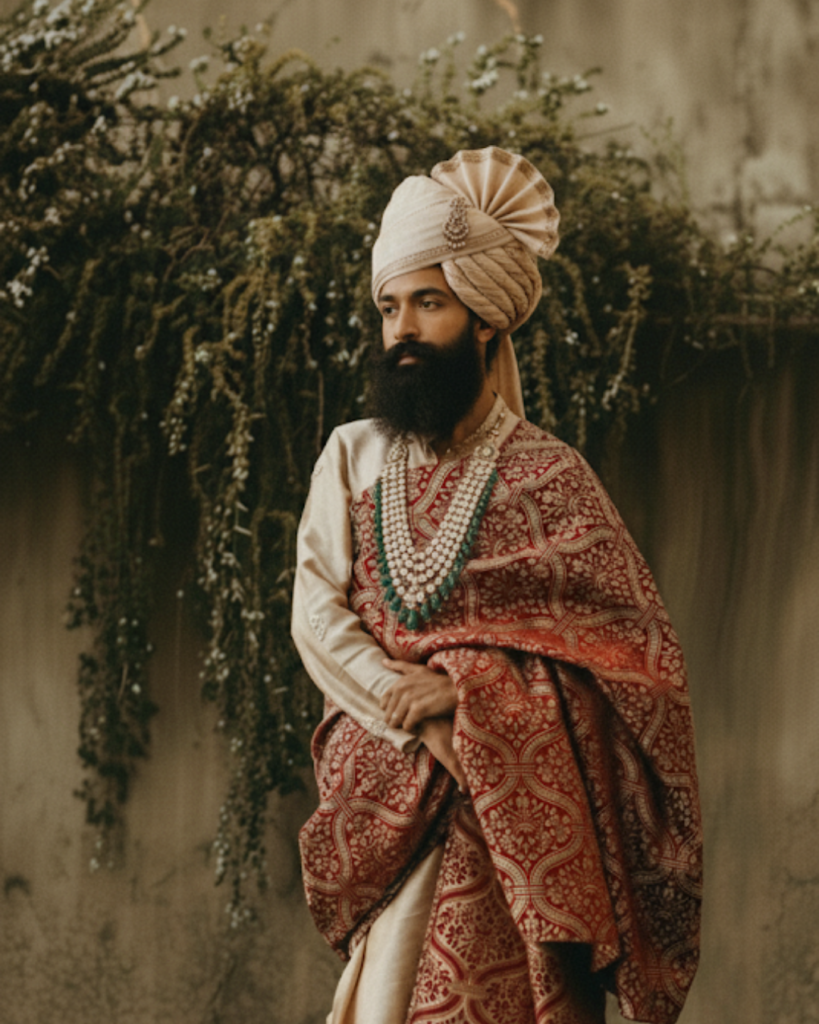
This article explores how the men’s kurta evolved from being a symbol of power and prestige to becoming a global style statement, bridging cultures and redefining men’s fashion.
1. Indian Origins: The Royal Beginning
The roots of the kurta can be traced back to ancient India, where it emerged as more than just a garment—it was an emblem of status, comfort, and grace.
Worn by Royalty: Kings, maharajas, and noblemen wore kurtas crafted from the finest muslin, silk, and cotton, tailored to signify both elegance and command.
Cultural Symbolism: Beyond its use as attire, the kurta reflected regional identity and social stature. Every weave and dye technique carried stories of the land and its people.
Accessories of Prestige: Royal men often paired their kurtas with bejeweled turbans, waist sashes (kamarbandh), dupattas, and ornaments, elevating the kurta to a royal ensemble.
The Indian kurta was not just clothing—it was a canvas of artistry, representing both cultural pride and royal magnificence.
2.Southeast Asian Splendor: Batik and Cultural Identity
The kurta’s influence crossed seas, especially in Southeast Asia, where it found a vibrant reinterpretation.
Batik Influence: In Indonesia and Malaysia, kurtas blended with traditional batik art, showcasing hand-drawn motifs, natural dyes, and intricate designs.
Cultural Identity: In regions like Thailand and Myanmar, loose tunic-like kurtas were adorned with embroidered collars and cuffs, reflecting local craftsmanship.
Ceremonial Significance: Beyond fashion, kurtas became attire for festivals, weddings, and spiritual gatherings, symbolizing respect, harmony, and cultural pride.
Here, the kurta transformed into a regional masterpiece, merging Indian roots with Southeast Asian creativity.
3. The Mughal & Rajput Era: Kurta as Regal Armor of Elegance
The kurta truly ascended to regal supremacy during the reigns of the Mughals and Rajputs.
Mughal Luxury: Mughal emperors wore kurtas stitched from silk, brocade, and velvet, heavily embroidered with zardozi (gold thread work) and embellished with precious stones.
Rajput Valor: Rajput kings paired kurtas with jamavars, churidars, angarkhas, and heavy turbans, showcasing both martial strength and cultural sophistication.
Royal Accessories: Bejeweled daggers, kamarbandhs, and ornate footwear (mojris/jootis) transformed the kurta into a symbol of prestige and authority.
In this golden era, the kurta was not only fashion—it was a statement of power, elegance, and royal identity.
4. Western Fusion: Kurta Meets the Runway
Fast forward to the modern era, and the kurta broke free of its geographic boundaries.
Cultural Adaptation: Immigrants and global communities carried the kurta with them, introducing it to Western fashion.
Fusion Fashion: Designers began experimenting by pairing kurtas with blazers, denim, sneakers, and tailored pants, creating a fusion style loved by celebrities and youth.
Global Recognition: Today, kurtas have graced international runways, featured in Hollywood and Bollywood films, and even influenced high-end brands.
The kurta’s adaptability turned it into a cross-cultural fashion icon, blending heritage with modern trends.
5. Global Appeal: The Kurta as a Symbol of Unity
What makes the kurta extraordinary is its universal charm.
Comfort Meets Elegance: Its versatile design makes it equally suitable for festivals, weddings, office wear, or casual outings.
Cross-Cultural Acceptance: From South Asia to Africa, Europe to America, the kurta is celebrated as a garment of inclusivity.
Symbol of Unity: No matter where it is worn, the kurta unites people by telling a story of shared heritage and global style.
Today, the kurta stands as a passport of style that connects diverse cultures under one elegant thread.
The Kurta’s World Domination
From royal courts and dynasties to global catwalks and streetwear, the kurta has secured its place as one of the most versatile garments in men’s fashion history.
In the past, it represented royalty, authority, and heritage.
In the present, it represents comfort, inclusivity, and modern fusion.
In the future, the kurta will continue to be a symbol of timeless elegance, evolving with global fashion trends while staying true to its regal origins.
The kurta is not just a piece of clothing—it’s a cultural ambassador, carrying with it the grandeur of kings, the artistry of traditions, and the adaptability of modern style.
The kurta began its journey as the attire of kings and today reigns as a global icon—truly a garment fit for every man who wishes to carry both heritage and style in a single thread.
Why Royals Wore Embroidered Kurtas and Heavy “Bharat Kaam”
In the times of kings and maharajas, clothing was never just about covering the body—it was a language of power, culture, and identity. Royals preferred kurtas adorned with embroidery and heavy “Bharat kaam” because these garments reflected authority and prestige. Rich handwork like zardozi, gota patti, chikankari, phulkari, and mirror work turned simple fabric into regal attire, often stitched on silk, velvet, or fine muslin.
The use of gold and silver threads, pearls, and precious stones in embroidery made these outfits not only beautiful but also a display of wealth and grandeur. At the same time, each embroidery style represented a region’s craftsmanship, allowing kings to celebrate and promote their kingdom’s art.
Thus, embroidered kurtas were more than fashion—they were symbols of royalty, cultural pride, and timeless artistry, setting rulers apart from the common people.
